

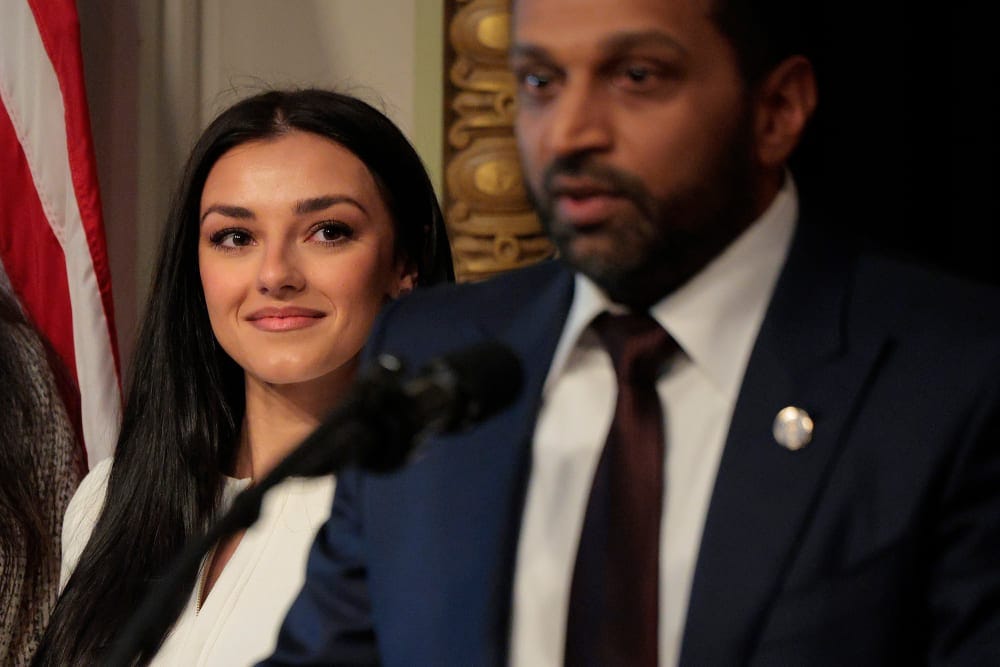
In the three months between September and December 2025, FBI Director Kash Patel announced the arrest or detention of suspects in three separate mass violence incidents. In each case, he was wrong.
What emerges from examining these cases is a pattern of premature public announcements, questionable information management, and troubling ties to foreign interests. The question now before Congress, the Justice Department, and the nation is whether our top law enforcement official is simply incompetent or something more deliberate. The evidence alone does not prove deliberate obstruction. But it presents a pattern that should alarm anyone concerned with the integrity of American law enforcement. It shows officials announcing suspects to the public before forensic confirmation is complete, creating a false sense of investigative progress while actual investigations continue separately.
Simultaneously, their documented ties to foreign interests align suspiciously with outcomes that benefit strategic rivals.
💡 This is a longform article. Short on time? Scroll down to Part VI.
Part I: Multiple Detentions in the Charlie Kirk Case
On September 10, 2025, conservative activist Charlie Kirk was shot and killed at Utah Valley University in Orem, Utah. An unknown gunman fired from approximately 200 yards away while Kirk addressed roughly 3,000 supporters. The shooter had no immediate identification. Law enforcement had no clear leads.
In the immediate aftermath, law enforcement detained multiple individuals. At least three separate people were taken into custody and questioned in the hours following the shooting.
Detaining and questioning “persons of interest” in the first hours after a high-profile shooting is standard police practice, and release after clearing someone is also routine. The issue in these cases is not that investigators detained people, it is that senior officials publicly signaled certainty before the evidence justified it, collapsing any difference between “in custody for questioning” and “identified perpetrator.” (A “person of interest” is not necessarily a suspect, and the term has no actual fixed legal meaning.)
George Zinn’s False Confession
A 71-year-old man named George Zinn appeared at campus police and announced to Officer Michael Dutson: “I shot him. Now shoot me.” Police detained him as a potential suspect. Videos of Zinn being detained by law enforcement officers circulated widely on X (formerly Twitter).
For investigators in those early hours, Zinn’s confession appeared credible. He was physically present at the scene. He had confessed to the crime. But this assessment quickly changed. When questioned about the location of the murder weapon, Zinn provided no answer. Under further questioning, he acknowledged that his confession was false.
Later, while being treated at a hospital, Zinn made a statement to police that clarified his motive. He said he had deliberately made the false confession to help the “real suspect get away.” In police reports, investigators noted that Zinn “deliberately yelled he was the shooter, thereby hindering law enforcement from concentrating on the real shooter.”
Why would a 71-year-old man make a false confession to murder? Authorities determined that Zinn sought to become a martyr. He believed his confession would create sufficient chaos to allow the actual shooter to escape. There is no evidence that Zinn had coordinated with the real shooter in advance. This appears to have been opportunistic obstruction by a man taking advantage of confusion at the scene.
Zinn was later charged with several felony counts of sexual exploitation of a minor based on evidence discovered during this
Innocent Attendee: Zachariah Qureshi
A second person detained that day was Zachariah Qureshi, a 25-year-old MBA student and former LDS missionary. Qureshi had attended the Kirk event as a supporter and was standing approximately 25 feet away when Kirk was shot. He was detained by law enforcement shortly after the shooting and interrogated by FBI agents.
Unlike Zinn, there was no false confession. Qureshi was detained simply for being present at the event. After questioning, law enforcement determined there was no evidence linking him to the crime. He was released.
The damage to Qureshi and his family appears substantial.
Following his release, his family was doxxed online. Their home address was shared across multiple social media platforms. The family experienced public harassment and threats. In interviews with local news outlets, Qureshi’s father stated his son had been “wrongfully detained.” The family requested anonymity out of safety concerns, though they emphasized their support for Kirk’s family and condemnation of the attack.
Speaking at a press conference, Utah Department of Public Safety Commissioner Beau Mason acknowledged the consequences of the detentions:
“After releasing them and clearing them of suspicion, they encountered backlash and threats. We urge that you do not intrude upon these individuals or the investigative process. They do not deserve this harassment for being part of the inquiry.”
The Significance of Three Detentions
What the Kirk case reveals is a law enforcement response that cast a wide net. Within hours of the shooting, police had detained at least three separate individuals. One made a false confession. One was an innocent attendee. One was never identified through normal police work at all.
The actual shooter was Tyler Robinson, 22, a politically motivated individual who had spent a week planning the assassination and positioned himself at an elevated distance to ensure he could leave the scene undetected. Robinson was identified not through police detective work in those critical early hours, but through the voluntary actions of his parents. His father and mother saw him in a video released by law enforcement to the media and public. They convinced him to turn himself in to the Utah County Sheriff’s Office on the evening of September 11, roughly 33 hours after the shooting.
Robinson had confessed to his roommate via Discord messages, writing “It was me at UVU yesterday. I’m sorry for all of this” soon before his arrest.
Patel’s Announcement in Context
FBI Director Kash Patel rapidly took to social media and announced that “the subject” in Kirk’s assassination had been apprehended. This announcement preceded any forensic analysis. There had been no DNA testing. No ballistic analysis had been completed. Investigators had not yet confirmed whether any of the detained individuals was actually involved in the shooting.
Campus police detained Zinn at approximately 3 p.m. on September 10. Patel announced the arrest on X (formerly Twitter). Qureshi was also in custody at that time. The announcement created the impression that law enforcement had identified and apprehended the person responsible for Kirk’s assassination.
This announcement was wrong. Both Zinn and Qureshi were released within hours of Patel’s statement. Neither was the shooter. The actual shooter remained unidentified for another 31 hours until Robinson’s parents turned him in. Again, the detentions themselves were not extraordinary; the extraordinary act was using them as the basis for a public announcement that implied the case was solved. In high-profile cases, that kind of premature public identification can distort tip flow, shift attention away from alternative leads, and create reputational damage that can’t be undone, even when the person is quickly cleared.
The sequence of events raises a troubling question: Did Patel announce the arrest of someone because he believed law enforcement had identified the shooter, or did he announce the arrest because law enforcement had detained someone? The difference is significant. The first reflects investigative confidence. The second reflects administrative action without investigative confirmation.
What Patel’s announcement actually conveyed was this: we have detained people and we are interrogating them. What the public understood was this: we have found the shooter. These two things are not the same.
The gap between them cost Zachariah Qureshi and his family their privacy and their sense of safety.
Part II: Brown University and the Pattern of Misidentification
Three months later, on December 13, 2025, a mass shooting occurred at Brown University in Providence, Rhode Island. Two students were killed: Ella Cook, 19, and Mukhammad Aziz Umurzokov, 22. Nine others were wounded. The shooting happened in a classroom at Barus & Holley Engineering and Physics Building during final exam period.
The shooting set off multiple waves of misidentification and false accusation.
Suspect Detained Using Unreliable Cell Data
Within hours of the incident, law enforcement identified a person of interest based on cellular location data. A suspect’s cellphone records appeared to place him near the shooting location. Police detained a man at a Hampton Inn in Coventry, Rhode Island.
Patel went public with an announcement about the suspect’s detention. Again, detaining someone based on an early lead can be normal; the nation’s top FBI official publicly implying that person is the shooter before verification is what turned routine policing into preventable harm.
CNN reported something significant about Patel’s timing:
“By that point, some investigators were already aware that the cellphone of the person of interest had not been detected at the shooting scene, leading to questions about his involvement.”
In other words, investigators already knew the cell data was unreliable when Patel made his public statement.
Subsequent forensic testing confirmed investigators’ skepticism. DNA from shell casings at the scene did not match the detained man. Ballistic tests showed his firearms were not the murder weapon. Gunshot residue testing on his hands came back negative. The man was released later the same day after spending roughly 12 to 24 hours in custody.
The announcement “drew ire from local and state officials in Rhode Island, who regarded it as hasty and detrimental to the investigation.” The report also noted that this incident “mirrored an earlier case where Patel prematurely announced an arrest related to the September assassination of conservative activist Charlie Kirk.”
Social Media Witch Hunt: Mustapha Kharbouch
As law enforcement continued the investigation, a second wave of misidentification began. This one did not originate from law enforcement or official investigators. Instead, it came from social media users and right-wing activists.
Mustapha Kharbouch is a 20-year-old first-year student at Brown University. Born and raised in Lebanon as a third-generation Palestinian refugee, Kharbouch had earned a scholarship to study International Affairs and Anthropology with a focus on the Middle East. He has been active in pro-Palestine activism and participated in the Gaza Solidarity Encampment at Brown. In 2024, he published a manifesto titled “I Hear The Voice of My Ancestors Calling: From The Camps to The Campus” through the Institute for Palestine Studies.
On December 15, 2025, the day after the shooting, social media users began posting that Kharbouch was the suspect. Their evidence was circumstantial and thin: his profile had been removed from the Brown University website. Right-wing activists seized on this.
Laura Loomer, the prominent far-right figure and alleged foreign agent, posted:
“Why won’t police say what the shooter yelled before he opened fire? ‘ALLAHU AKBAR’ is what witnesses heard. Why is Brown deleting this Palestinian from their website? Is he a suspect?”
The claims spread rapidly across X, other social media platforms, and right-wing news outlets. Hashtags circulated claiming Brown was “scrubbing” Kharbouch’s profile as evidence of a cover-up. Reporters no one had ever heard of asked aggressive questions about said “scrubbing” at periodic press conferences held by law enforcement to update the public. Screenshots of his manifesto were shared widely. Conspiracy theories proliferated, claiming authorities were protecting a Palestinian attacker. Kharbouch’s home address and contact information were shared online. He was doxxed and harassed based on pure speculation.
Yet Kharbouch was not detained. He was not arrested. He wasn’t even named as a person of interest by law enforcement. Instead, he was publicly misidentified by social media users and far-right activists, faced harassment and threats, and was forced to delete his social media accounts for safety.
Official Responses
Law enforcement’s response to this was unambiguous.
The Providence Police Department explicitly stated they had “ruled out Mustapha Kharbouch as the Brown shooter.” When pressed further, police said: “If that name meant anything to this investigation, we would be out looking for that person, and we would let you know we were looking for that person.”
Rhode Island Attorney General Peter Neronha issued a warning: “It’s a really dangerous road to go down. If that name meant anything to this investigation, we would be out looking for that person.”
Brown University issued a protective statement: “Targeting individuals could do irrevocable harm. Accusations, speculation, and conspiracies we’re seeing on social media and in some news reports are irresponsible, harmful, and in some cases dangerous for the safety of individuals in our community.”
The university explained that it had removed Kharbouch’s profile as a protective measure. According to Brown’s statement: “It is not unusual as a safety measure to take steps to protect an individual’s safety when this kind of activity happens, including regarding their online presence.”
In other words, the removal of Kharbouch’s profile from the website was not a cover-up. It was an attempt to protect him from the very harassment he was facing because he had been publicly identified as a suspect in a mass shooting, without evidence, based on social media speculation.
The Real Shooter: Claudio Manuel Neves Valente
The actual shooter was identified by law enforcement yesterday, December 18, 2025: Claudio Manuel Neves Valente, a 48-year-old Portuguese national and former Brown University student. Valente was found dead in a storage facility in Salem, New Hampshire, having died by self-inflicted gunshot wound as law enforcement surrounded the building.
Valente had attended Brown from fall 2000 to spring 2001 as a graduate student in physics. He had obtained legal permanent resident status in September 2017. Investigators believe he was also responsible for the death of MIT Professor Nuno Loureiro on December 15, 2025, two days after the Brown shooting. Valente and Loureiro had attended the same academic program at the University of Porto and shared academic circles.
Investigators tracked Valente through financial records, vehicle rental tracking, and surveillance footage. A Reddit tip helped lead authorities to the storage facility where he was found.
The AFP fact-check organization documented the misidentification of Kharbouch this way:
“Before police identified the shooter who fired on a Brown University study session as 48-year-old Claudio Neves Valente, a torrent of posts from mostly anonymous accounts on X claimed the gunman who killed two students and wounded multiple others was a Palestinian student at the school named Mustapha Kharbouch. But there was never any credible evidence implicating Kharbouch in the attack.”
The identification photographs prove the two men are completely different.
Valente was a 48-year-old white man. Kharbouch was a 20-year-old Palestinian refugee. They shared nothing but the unfortunate circumstance that Kharbouch was a Palestinian student at the university where Valente committed mass murder.
Why Announce a Suspect You Know Is Wrong?
The critical question about Patel’s announcement remains: why did he announce the detention of someone based on evidence that investigators already understood was unreliable? The announcement served no investigative purpose. It created public expectation that the case had been solved. It publicly identified an innocent man as a suspect in a mass shooting. It muddied the investigative record.
Two premature announcements in four months. The second came after Patel had already been criticized for the first. The second came despite Patel being aware that the evidence was problematic. This cannot be written off as careless oversight. The pattern suggests either reckless indifference to the consequences of public announcements or something more calculated.
But Patel’s announcement also created the political space for the subsequent social media witch hunt against Kharbouch. Once the public believed that a suspect had been identified and detained based on cell tower data, once they believed law enforcement was on the case, once they believed the investigation was heating up, the conditions were set for far-right activists to suggest their own suspect and amplify their own theories. If law enforcement had said “We have no suspect and no clear leads,” the social media speculation might never have gained traction. But Patel’s premature announcement created the false impression that investigators were closing in, that details were emerging, that arrests were imminent.
Into that vacuum of uncertainty but apparent momentum, far-right activists fed conspiracy theories about a Palestinian cover-up.
Kharbouch, an innocent student, was doxxed and harassed.
Part III: Why Nuno Loureiro Mattered
The timing and strategic implications of Loureiro’s death extend beyond simple misfortune. Nuno Loureiro was not a marginal figure in fusion research; he was, by December 2025, among the world’s most strategically important plasma physicists. His murder has occurred at a moment of unprecedented geopolitical competition in fusion energy technology.
Less than one year ago in January 2025, President Biden presented Loureiro with the Presidential Early Career Award, the highest honor given to young American scientists. At 48, Loureiro was the director of MIT’s Plasma Science and Fusion Center, the nation’s largest fusion research lab and the intellectual engine of American fusion development. His research focus into magnetic reconnection, plasma turbulence, and confinement physics addressed the most fundamental obstacles to commercially viable fusion reactors.
Loureiro had developed and was actively refining Viriato, a massively parallel computational code capable of simulating plasma behavior in four dimensions with unprecedented accuracy. This code is essential infrastructure for designing the next generation of fusion reactors, including ITER (the International Thermonuclear Experimental Reactor) and commercially-focused devices being built by Commonwealth Fusion Systems and other private fusion firms. Possession and mastery of such predictive tools provides an enormous technical and economic advantage in the global race to achieve the first commercially viable fusion reactor.
Loureiro was the primary institutional link between MIT’s basic research and the private fusion sector. His PSFC directly spawned Commonwealth Fusion Systems (CFS), which spun out in 2018 and is now the world’s most heavily funded private fusion company. Loureiro’s research directly informed CFS’s SPARC tokamak design, which aims to achieve burning plasma (net energy gain) by 2026, a milestone that, if achieved, would represent a historic breakthrough in fusion science and establish American leadership in that technology for decades.
The Geopolitical Stakes
The fusion energy sector is not an academic backwater. The U.S. government, China, and Russia has recognized fusion as a strategic technology that will help define 21st-century energy dominance and global power.
As of 2025, China has committed $6.5 billion to fusion development since 2023, which is three times the U.S. federal government spend over the same period. China’s strategy explicitly targets supply chain dominance in the critical industries that enable fusion commercialization: thin-film processing, metal alloy structures, power electronics. Though economically constrained, Russia has maintained active fusion research programs and has historically positioned itself as a technical competitor in plasma physics.
The United States’ competitive advantage rests almost entirely on the private sector (Commonwealth Fusion Systems, TAE Technologies, Helion Energy) and on fundamental research done in institutions like MIT’s PSFC. If you can manage to remove the key researchers who understand the physics and maintain the institutional relationships between basic research and commercial development, that advantage erodes rapidly.
The Merger Timing and Foreign Capital
Two days after Loureiro’s death, Trump Media & Technology Group (TMTG) announced a $6 billion all-stock merger with one of the world’s leading private fusion companies, the aforementioned TAE Technologies. The announcement did not simply reposition a social media company into fusion, it consolidated Trump’s private tech portfolio with a company at the cutting edge of fusion commercialization, particularly TAE’s Field-Reversed Configuration (FRC) technology and its aneutronic hydrogen-boron fuel approach.
TAE’s capitalization structure has a strategically sensitive history. The company (which was previously operating as Tri Alpha Energy) received investment from Rusnano, a Russian state-backed technology investor, and Rusnano’s CEO Anatoly Chubais joined TAE’s board after that 2012 investment. While Russian ownership is not currently transparent from public filings, the historical involvement of Russian state capital in TAE’s development is documented.
More broadly, TAE’s investor base includes Google, Chevron, venture capital firms, and institutional investors. But the company’s technology, particularly its AI-accelerated plasma simulations and its hydrogen-boron fuel approach, has direct applications to military propulsion systems, energy weapons platforms, and strategic deterrence architectures. Foreign intelligence services and state-backed investors in fusion have strong incentives to understand, influence, or acquire access to proprietary approaches that could advance their own programs.
The Intelligence Angle
When a leading American fusion scientist is murdered by a suspected political killer in his own home at a moment when:
The U.S. is in explicit competition with China (3x higher fusion funding) and Russia (active state programs) to achieve commercial fusion first;
That scientist is the director of the nation’s largest fusion research lab and holds the keys to computational models used across the private fusion sector;
A major fusion company immediately announces a massive merger with a politically connected entity, consolidating control over fusion technology;
Law enforcement’s investigation of that homicide is preceded by false suspect announcements from officials with documented foreign ties and financial relationships;
—this convergence creates a useful environment for misdirection to serve strategic interests.
This is not to claim that Patel’s announcements or Gabbard’s oversight removals caused Loureiro’s death. The evidence does not support that inference. But it does show that when institutional failures occur, such as when law enforcement misidentifies suspects and wastes critical investigative time, those failures happen in an environment where powerful actors have strategic reasons to prefer that investigations be confused, delayed, or diverted.
A false suspect announcement in a routine criminal case is a procedural failure. A false suspect announcement in the death of the director of America’s premier fusion research center, committed by an FBI Director with documented Russian financial ties, during a period when that Director is simultaneously removing surveillance oversight of classified programs…
It is a pattern demanding explanation beyond basic incompetence.
Part IV: Patel’s Russian Money Ties
To understand the significance of Patel’s pattern of mismanagement, his documented financial and ideological relationships with foreign interests become relevant.
Payment From A Kremlin Filmmaker
In February 2025, the Washington Post reported that Patel had received a $25,000 payment from Evgeny Lopatonok, a filmmaker with connections to the Kremlin. Lopatonok is regarded by U.S. intelligence officials as aligned with the Putin administration and has produced content at the direction of Kremlin officials.
The payment was connected to a documentary series called “All the President’s Men: Conspiracy Against,” which aired on Tucker Carlson’s platform in November 2024. The series portrays Trump administration officials, including Patel, as victims of a political conspiracy to remove a democratically elected president.
More significantly, Lopatonok’s company has produced other projects funded by sanctioned Russian oligarchs. One such project, developed after Russia’s full invasion of Ukraine in February 2022, was explicitly designed to undermine U.S. financial support for the war and to reduce the flow of weapons and military assistance to Ukraine.
This is not merely a financial transaction between unrelated parties.
It’s a documented relationship between the FBI Director and individuals who work on behalf of Russian state interests to undermine U.S. support for Ukraine.
Removal of Surveillance Oversight
In May 2025, shortly after his confirmation as FBI Director, Patel closed the FBI’s Office of Internal Auditing. This office, created in 2020, was responsible for monitoring the FBI’s use of FISA Section 702 surveillance authorities. While the FBI claimed to right-wing outlet The Daily Caller that the closure is in reality a simple act of restructuring, this sounds less like a meaningful distinction and more like bureaucratic spin.
The timing is worth noting. Before his confirmation, Patel had been a vocal critic of FISA surveillance powers, claiming the FBI had abused warrantless wiretapping capabilities. Yet upon becoming FBI Director, his position changed entirely. Rather than strengthening internal oversight mechanisms, he eliminated the office designed to prevent surveillance abuse.
This removal of internal oversight occurred during the same months when the Trump administration took other actions that advantaged Russian interests. In March 2025, the administration halted intelligence sharing with Ukraine. National Security Advisor Mike Waltz stated that the administration would pause the security relationship with Ukraine, and CIA Director John Ratcliffe confirmed that Trump himself had ordered the halt to intelligence sharing.
A Russian lawmaker, Andrei Kartapolov, explicitly encouraged the U.S. to cease intelligence sharing with Ukraine, noting that doing so “would allow us to achieve results more rapidly.”
The sequence of events paints a clear picture. The FBI’s internal surveillance oversight is eliminated. Intelligence sharing with Ukraine is halted. Both of these moves benefit Russian strategic interests.
Both occurred under leadership with documented ties to Russian interests.
The Prior Record
Before his appointment as FBI Director, Patel had compiled a documented record of undermining investigations that touched on Trump. During Trump’s first term, Patel, then serving on the House Intelligence Committee, played a significant role in Republican efforts to discredit investigations into Trump’s connections with Russia.
Patel publicly criticized U.S. intelligence community assessments about Russian interference in the 2016 election, which aimed to boost Trump’s campaign. Upon confirmation as FBI Director, Patel pledged to “come after” journalists and government officials he views as enemies and published a list of Trump critics he intends to target.
Part V: Gabbard’s Foreign Ties and Shauni Kerkhoff
The case of Shauni Kerkhoff, a former Capitol Police officer, highlights a related but distinct pattern of misuse of government authority. In November 2025, Paul McNamara, who oversees Director of National Intelligence Tulsi Gabbard’s “Director’s Initiatives Group,” which according to CBS is tasked with providing "transparency and accountability" and executing President Trump's intelligence-related executive orders, drafted a classified memo identifying Kerkhoff as the individual responsible for placing pipe bombs outside DNC and RNC headquarters on January 5, 2021.
McNamara accessed classified government files to obtain Kerkhoff’s personal information, including her Social Security number. The classified memo was leaked. Blaze News published Kerkhoff’s name on November 8, 2025, citing “gait analysis” software as confirmation that she was the bomber. Republican Representatives Barry Loudermilk and Thomas Massie shared the article on social media. The false accusation spread like wildfire through right-wing media outlets and online forums.
The FBI investigated Kerkhoff and cleared her. She provided video evidence showing her at home with her pets at the exact time the bombs were planted. The FBI found no basis to pursue her as a suspect. The actual suspect, Brian Cole Jr., was arrested on December 4, 2025, nearly four years after the bombings. Cole was charged with transporting an explosive device across state lines and attempted malicious destruction using explosive materials.
Reports indicate Gabbard distanced herself from the memo, saying information about the woman spread without her knowledge while she was traveling abroad, and the memo hadn't been reviewed or approved by agency leadership.
Tulsi Gabbard’s Foreign Ties
To understand why a Director of National Intelligence would authorize a memo misidentifying an innocent American as a domestic terrorist, Gabbard’s own documented ties to foreign powers and ideologies become significant.
Gabbard has extensively amplified Russian talking points regarding Ukraine and Russia’s invasion. In February 2022, three days after Russia’s full-scale invasion began, Gabbard posted on X: “Dear Presidents Putin, Zelensky, and Biden. It’s time to put geopolitics aside and embrace the spirit of aloha, respect and love, for the Ukrainian people by coming to an agreement that Ukraine will be a neutral country.” She has consistently echoed Putin’s claim that Russia’s “legitimate security concerns” justified the invasion, mirroring the Kremlin’s official rationale.
More troubling are Gabbard’s ties to India’s Hindu nationalist movements. Gabbard has extensive connections to the Rashtriya Swayamsevak Sangh (RSS), a paramilitary organization and parent group of India’s ruling Bharatiya Janata Party (BJP). According to reporting, hundreds of Indian Americans affiliated with Sangh groups have donated extensively to Gabbard’s campaigns and political endeavors. Gabbard played a significant role in rehabilitating the image of Indian Prime Minister Narendra Modi in the United States. Modi had been denied a U.S. visa for over a decade due to his alleged complicity in the 2002 Gujarat riots, during which over a thousand lives were lost in anti-Muslim violence. Despite these concerns and reports from Human Rights Watch and Amnesty International documenting the spread of Hindu nationalist violence under Modi’s administration, Gabbard has repeatedly called India an “indispensable partner” to the United States and lobbied for enhanced U.S.-India cooperation.
Gabbard’s 2017 trip to Syria to meet with Bashar al-Assad raised additional concerns among national security officials. Assad has been accused of war crimes and the deaths of hundreds of thousands of Syrians. Despite investigations concluding that Assad was responsible for chemical weapons attacks, Gabbard questioned these findings, casting doubt on U.S. intelligence assessments.
Russian state media has praised Gabbard’s selection as DNI. Russian talk show host Olga Skabeyeva stated that Gabbard “articulated [Russia’s] motivations, criticized the Biden administration’s actions, and even personally met with Syrian President Bashar al-Assad to support his fight against terrorists.”
Her favorable reception in Russian media, combined with her public statements echoing Kremlin narratives, has raised alarms among former U.S. intelligence and national security officials.
Tulsi’s Alignment to Patel’s Pattern
Both Patel and Gabbard are aligned within the Trump administration. Both have undermined oversight of intelligence and law enforcement activities. Both have demonstrated their willingness to use state resources to target individuals based on insufficient evidence. Both have documented ties to hostile foreign powers and harmful ideologies that strongly benefit from the overall visible degradation of U.S. intelligence capacity.
In this collaborative alignment of officials with problematic ties to foreign powers, government officials have used state resources to falsely identify an American citizen as a suspect in a mass violence or terrorism incident. In the cases of Patel, his announcements preceded forensic confirmation. In the case of Gabbard’s subordinate McNamara, a classified memo was used to publicly name an innocent woman as a terrorism suspect while Gabbard claimed ignorance of the matter and pretended not to have approved it.
Part VI: The Broader Pattern and the Criminological Question
What unites these cases is not coincidence but a systematic pattern of misidentification, premature announcement, and inadequate evidence management by officials with documented ties to foreign interests. In the Kirk case, multiple innocent people were detained. In the Brown University case, a suspect was announced based on evidence investigators already knew was unreliable, and a Palestinian student was then publicly named and harassed through social media speculation. In the Kerkhoff case, a classified government memo was used to publicly name an innocent woman as a terrorism suspect.
The common thread is the same: government officials and right-wing activists making public announcements and spreading accusations before investigations were complete, before evidence was verified, before innocent people had any protection from the consequences of being wrongly identified.
For Qureshi, this meant his home address was published online and his family faced harassment. For the Brown University suspect held on cell tower data, it meant 12 to 24 hours in custody based on evidence investigators questioned. For Mustapha Kharbouch, it meant being publicly named as a mass shooting suspect by social media users and far-right activists, with no evidence and explicit law enforcement denials. For Shauni Kerkhoff, it meant FBI investigation and public naming as a domestic terrorist based on unvalidated gait analysis software and a leaked classified memo from the intelligence community.
In each case, the announcement or accusation preceded verification. In each case, innocent people paid the price. In the cases involving law enforcement (Kirk, Brown detained suspect, Kerkhoff), the announcements came from officials with direct authority or classified access (Patel, McNamara under Gabbard). In the case of Kharbouch, the accusations came from social media and right-wing activists, but they gained traction because Patel’s premature announcement had created a false impression that law enforcement was closing in on a suspect.
The Implications of Intentional Misidentification
My question is whether this pattern reflects a series of catastrophic failures in judgment and evidence management, or whether it reflects something more deliberate. The answer matters. If it is deliberate, then Congress and the Justice Department must confront a far more serious question.
Publicly misidentifying a suspect in a high-profile mass violence case is not a victimless mistake. If intentional, it constitutes obstruction of justice and potentially aid and comfort to actual perpetrators.
When Patel announced the wrong suspect in Charlie Kirk’s assassination, the actual shooter remained at large for 31 hours. Those hours could have been critical to capturing him before he fled. Instead, law enforcement resources, media attention, and investigative focus were directed toward innocent men.
The real shooter’s window for escape was preserved.
When Patel announced the wrong suspect in the Brown University shooting based on evidence investigators already knew was unreliable, investigators’ focus shifted from finding the actual perpetrator to investigating a man they knew was innocent. The real shooter remained at large for five days before being found dead in New Hampshire. During those five days, law enforcement was divided between the false lead and the real investigation. The false accusation consumed investigative resources, media bandwidth, and public attention.
When McNamara’s classified memo identified Shauni Kerkhoff as a domestic terrorist, the actual pipe bomber remained free for nearly four years. The misidentification didn’t just harm Kerkhoff. It delayed the capture of an actual dangerous person who had placed explosives near the headquarters of the Democratic National Committee.
These are not abstract harms. Misidentifying suspects in terrorism and mass violence cases can pose concrete, serious, and measurable consequences.
Diversion of Investigative Resources: Law enforcement agencies have finite personnel, forensic capacity, and investigative focus. Resources directed toward innocent people are resources unavailable for pursuing actual perpetrators. Every hour spent investigating an innocent suspect is an hour the real killer uses to establish an alibi, flee jurisdiction, or dispose of evidence.
Closure of Capture Window: The first hours and days after a mass violence incident are critical. Perpetrators are most vulnerable immediately after the act, before they’ve reconstituted their alibis or fled. False announcements create false leads that consume this critical window. By the time investigators refocus, the perpetrator has moved into a safer position.
Misdirecting Public Cooperation: When law enforcement announces a suspect, the public reacts based on that information. Tips are withheld. Witnesses stop looking. Alternative leads are not pursued. A false announcement doesn’t just misdirect investigators, it misdirects citizen cooperation and crowdsourced investigation.
Degradation of Public Trust: Each false accusation erodes public confidence in law enforcement’s investigative competence. Citizens become skeptical of official announcements. This skepticism extends to legitimate investigations. The innocent people falsely accused become unwilling witnesses for future prosecutions because they’ve experienced firsthand what it means to be named by government without evidence.
Weaponization of Allegations: If these misidentifications are intentional, they represent a tool for misdirecting investigations and protecting actual perpetrators. An official with knowledge of who actually committed a crime could announce the wrong suspect to shield the real perpetrator. In each of these cases, the timing of the false announcement preceded the capture of the actual suspect. This pattern is consistent with intentional obstruction.
The Foreign Intelligence Question
Here is where the foreign ties become criminologically significant. Intelligence officials often operate according to strategic interests, not legal constraints. If Patel or Gabbard are acting in coordination with or under the influence of foreign intelligence services, their pattern of misidentification could serve foreign strategic interests in multiple ways:
Undermining Credibility of U.S. Law Enforcement: Each false accusation damages American law enforcement’s reputation internationally. This degradation benefits U.S. adversaries, which have consistently criticized American law enforcement as unreliable and politically motivated. An FBI Director who systematically announces wrong suspects delivers proof of these criticisms.
Delaying Capture of the Perpetrator: If foreign intelligence services have relationships with actual perpetrators (whether direct or through intermediaries), delaying their capture serves foreign interests. False suspect announcements accomplish this delay while maintaining plausible deniability.
Testing Law Enforcement Response: Foreign intelligence services study American law enforcement methods. Misidentifications that reveal how investigations proceed, including what evidence is considered, what leads are pursued, how public announcements are made, constitute intelligence gathering. Patel has publicly released far more information regarding the FBI’s investigative sources and methods than would be
Degrading Investigative Capacity: By reducing public trust in law enforcement through false accusations, officials with foreign ties could systematically undermine U.S. investigative capacity against actual threats. This serves strategic rivals by reducing the United States’ ability to identify and capture perpetrators.
What Congress Must Investigate
Congress and the Justice Department must confront these possibilities directly:
Was each announcement made with knowledge of its inaccuracy? Patel announced the Brown University suspect knowing the evidence was unreliable, according to CNN’s reporting. This is not negligence. This is knowledge.
What communications exist between Patel and foreign operatives around the timing of these announcements? Financial records show Patel received payments from Kremlin-connected figures. Do contemporaneous communications show coordination on law enforcement strategy?
Did false announcements serve any investigative purpose, or were they purely for public consumption? If purely for public consumption, then what was the intent?
What is the relationship between these misidentifications and Gabbard’s removal of surveillance oversight? If officials are deliberately misidentifying suspects, enhanced surveillance oversight would catch it. Was its removal intended to prevent detection?
Are there other cases (not yet public) where Patel or other officials announced incorrect suspects? One wrong announcement might be carelessness. Two suggests pattern. But what if there are three, four, or more cases that haven’t received public attention?
If the answer to these questions is incompetence, the solutions could be straightforward: impeachment procedures, protocol review, reinstatement of oversight, accountability for procedural failures. American law enforcement can recover from institutional failures through reform.
But if the answers reveal coordination with foreign intelligence services to obstruct justice and delay perpetrator capture, then this investigation involves the highest levels of crime: officials using government power to serve foreign interests while hindering our nation’s ability to prosecute terrorists and murderers, some of whom may themselves have covert foreign linkage.
The suspects were wrong. The pattern is unmistakable.
Congress, if it still has any purpose or meaning to this Union whatsoever, must determine whether the pattern reflects failure or intent.